Introduction: The Investigation That Divided Washington
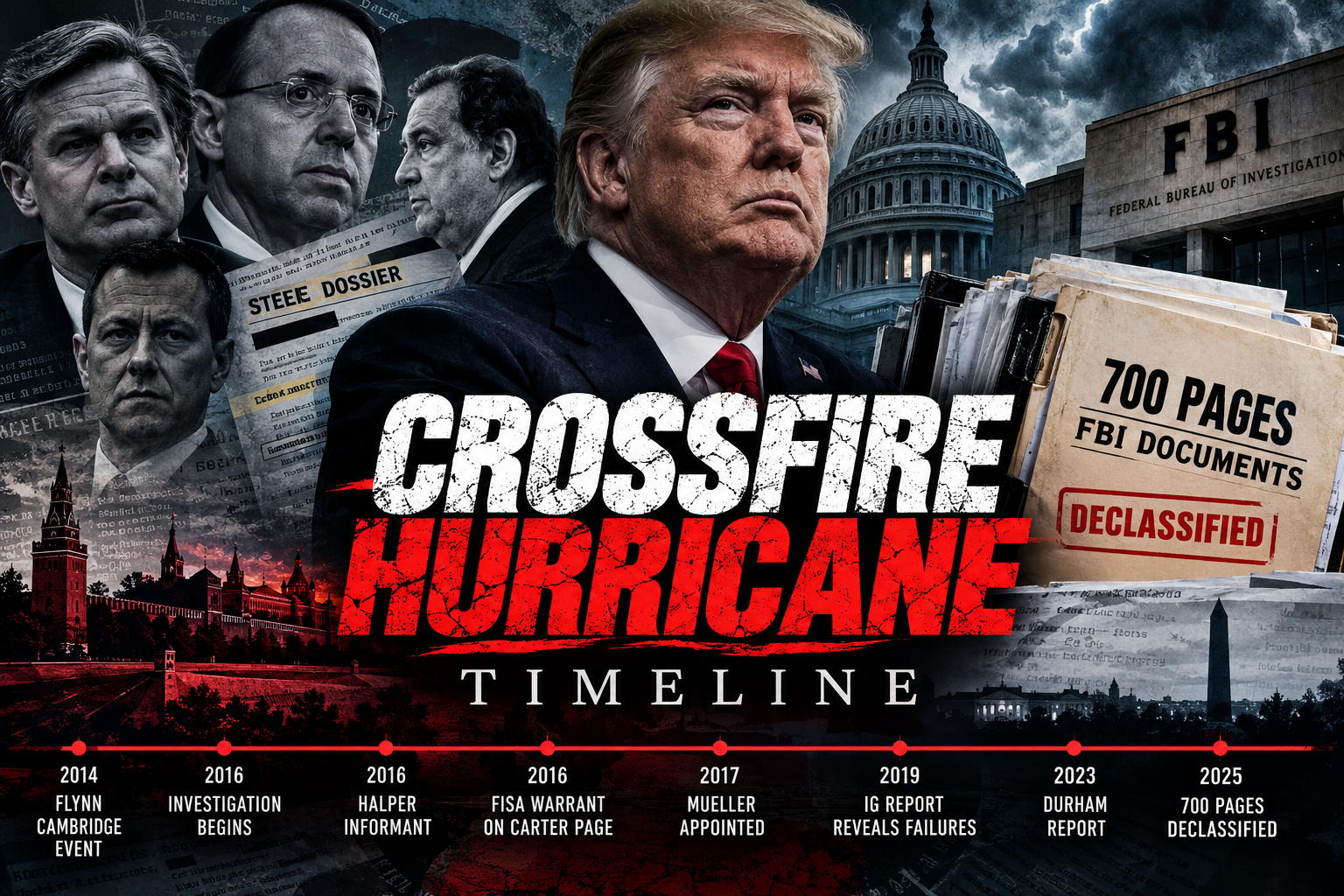
On April 10, 2025, nearly 700 pages of previously withheld FBI records concerning Crossfire Hurricane became publicly available following a renewed declassification order from President Donald Trump.
The documents, delivered by FBI Director Kash Patel to House Judiciary Committee Chairman Jim Jordan and subsequently published by Just the News, provided additional information about confidential informants, internal FBI communications, investigative decisions, and the handling of intelligence concerning Trump's 2016 presidential campaign.
Among the most significant disclosures were records concerning Stefan Halper, a longtime FBI confidential human source whose reporting helped investigators examine alleged connections between Trump campaign associates and Russia.
According to the released FBI records, Halper received approximately $1.18 million from the bureau dating back to 1991, including $70,000 associated with his work during the 2016–2017 period.
The documents also revealed that investigators questioned the accuracy of an allegation Halper made concerning retired General Michael Flynn.
These disclosures renewed questions about FBI oversight, confidential source reliability, political influence, and the legal standards governing surveillance of American citizens.
To understand the significance of the documents, it is necessary to examine the investigation from its origins.
2014: The Michael Flynn Incident That Later Raised Questions
On February 28, 2014, Michael Flynn, then director of the Defense Intelligence Agency, attended an intelligence-related event at Cambridge University in England.
The gathering included Russian-born academic Svetlana Lokhova.
According to information subsequently provided to the FBI by Stefan Halper, Flynn allegedly left the event with Lokhova, including claims that they traveled together toward London.
The account raised concerns about whether the senior American intelligence official had engaged in an inappropriate encounter with someone suspected of Russian connections.
However, the FBI later examined the allegations and found no corroborating intelligence.
Agent William Barnett, who worked on the Flynn investigation, subsequently described the account as implausible. He questioned how a senior intelligence official could leave an overseas event without the activity being noticed by accompanying security personnel.
Flynn also disputed the allegation.
The significance of this episode emerged in 2016, when Halper's account became part of the information considered during the FBI's investigation of Flynn.
The released documents do not establish that Halper knowingly fabricated the story. They do, however, demonstrate that investigators had reason to question its reliability.
July 2016: Crossfire Hurricane Officially Begins
On July 31, 2016, the FBI formally opened Crossfire Hurricane, a counterintelligence investigation examining whether individuals associated with Donald Trump's presidential campaign were coordinating with the Russian government.
The immediate basis involved information passed to American authorities by Australia.
George Papadopoulos, a foreign policy adviser to the Trump campaign, had reportedly suggested during a conversation with an Australian diplomat that Russia possessed damaging information about Hillary Clinton.
Following the public release of hacked Democratic Party emails, Australian officials passed information about the conversation to American authorities.
The FBI opened investigations involving four campaign associates:
- George Papadopoulos
- Carter Page
- Paul Manafort
- Michael Flynn
The original investigation was not based on Christopher Steele's dossier, which became more important during subsequent investigative steps.
This distinction matters because later government reviews reached different conclusions about the justification for opening Crossfire Hurricane.
In December 2019, Justice Department Inspector General Michael Horowitz concluded that the investigation satisfied the FBI's relatively low legal threshold for opening a counterintelligence investigation.
However, Special Counsel John Durham's May 2023 report criticized the FBI for opening a full investigation without sufficient corroboration or preliminary investigative work.
Durham argued that a less intrusive assessment would have been more appropriate.
These findings established a fundamental disagreement over whether the FBI exercised proper judgment at the investigation's beginning.
August–September 2016: Stefan Halper Becomes an Important Informant
During August 2016, FBI agents met with Stefan Halper, an American academic with connections to Cambridge University and a longstanding relationship with federal intelligence and law enforcement institutions.
Halper was already an established confidential human source.
Newly released records show that the FBI used him to gather information about individuals associated with Trump's campaign, including Carter Page and George Papadopoulos.
In an August 11, 2016, debriefing, Halper provided information concerning Michael Flynn's earlier Cambridge appearance and his alleged interaction with Svetlana Lokhova.
On August 16, investigators formally opened the Flynn investigation under the code name Crossfire Razor.
The documents also describe FBI preparations for operations involving Page and Papadopoulos.
Halper's participation raises an important distinction between legitimate counterintelligence collection and the potential misuse of informants during an election.
The FBI had authority to investigate foreign intelligence threats, but its methods were subject to internal rules governing necessity, proportionality, reliability, and political sensitivity.
The documents demonstrate that Halper was tasked with gathering information about Trump campaign associates.
They do not, by themselves, establish that every interaction constituted unlawful spying or that the entire operation was politically directed.
October 2016: The Steele Dossier and Carter Page Surveillance
Former British intelligence officer Christopher Steele prepared a series of reports alleging connections between Trump's campaign and Russia.
The research was funded indirectly through the Clinton campaign and Democratic National Committee, using the law firm Perkins Coie and opposition research firm Fusion GPS.
On October 21, 2016, the FBI obtained a Foreign Intelligence Surveillance Act warrant targeting Carter Page, a former Trump campaign adviser.
The application relied significantly on information from Steele's reporting.
The FBI subsequently obtained three renewals of the surveillance authorization.
Inspector General Horowitz's 2019 review identified 17 significant inaccuracies and omissions in the applications.
Among the problems were failures to disclose information that weakened allegations against Page, insufficient scrutiny of Steele's claims, and omissions involving Page's previous relationship with another American government agency.
The inspector general found serious failures in the FBI's obligation to present complete and accurate information to the Foreign Intelligence Surveillance Court.
These failures became one of the most consequential documented findings of misconduct and negligence associated with Crossfire Hurricane.
They also raised broader concerns about whether intelligence gathered through confidential sources was being properly tested before federal surveillance powers were authorized.
November 2016–January 2017: Election Results and Continued Investigation
Donald Trump won the presidential election on November 8, 2016.
Despite the election's conclusion, the FBI continued investigating possible Russian connections.
In January 2017, investigators working on the Flynn case prepared to close their investigation after failing to identify sufficient evidence establishing that Flynn was acting on behalf of Russia.
Senior FBI officials intervened, and the case remained open.
On January 24, 2017, agents Peter Strzok and Joe Pientka interviewed Flynn concerning his conversations with Russian Ambassador Sergey Kislyak.
Flynn later pleaded guilty to making false statements to the FBI, although the Justice Department ultimately moved to dismiss his case and President Trump pardoned him in November 2020.
The episode became central to disputes over investigative procedures and prosecutorial conduct.
Meanwhile, the government continued evaluating the information supplied by confidential sources.
March–April 2017: FBI Validates Halper Despite Questions About His Reporting
The most significant information in the April 2025 release concerns the FBI's assessment of Stefan Halper.
A March 2017 validation review recommended his continued use as a confidential human source.
According to the disclosed records, the FBI's Validation Management Unit considered Halper suitable based on assessments of authenticity, reliability, and operational control.
Yet the same records acknowledged an important limitation: investigators had been unable to independently corroborate significant portions of his reporting.
The release also demonstrated that FBI personnel had questioned his account involving Flynn and Lokhova.
Despite those concerns, the bureau maintained its relationship with Halper.
The financial records reveal that the FBI had paid him $1,181,064.44 dating back to 1991.
Approximately $70,000 was paid during the period associated with Crossfire Hurricane and its immediate aftermath.
An April 2017 source report identified both monetary compensation and ideological or patriotic considerations as motivations for his cooperation.
An important distinction remains: the entire $1.18 million was not compensation for Crossfire Hurricane. It represented payments spanning decades of source activity.
Nevertheless, the records raise legitimate oversight questions.
How did the FBI assess contradictory information from its sources? Were source validation reviews sufficiently independent? Did agents document and communicate credibility concerns consistently?
Those questions concern institutional accountability regardless of political affiliation.
May 2017–March 2019: The Mueller Investigation
On May 17, 2017, Deputy Attorney General Rod Rosenstein appointed Robert Mueller as special counsel to investigate Russian interference in the 2016 election and related matters.
The investigation examined Russian cyberoperations, social media influence activities, contacts between Russian individuals and Trump campaign associates, and potential obstruction of justice.
Mueller completed his investigation in March 2019.
The report concluded that Russia had conducted significant efforts to influence the presidential election.
However, investigators did not establish that the Trump campaign entered into a criminal conspiracy or coordinated agreement with the Russian government concerning election interference.
This finding did not mean investigators determined that all contacts were innocent or that Russian interference had not occurred.
The report documented numerous interactions involving Russian-connected individuals and Trump associates.
On obstruction of justice, Mueller declined to reach a traditional prosecutorial conclusion regarding Trump's conduct.
The resulting distinction was substantial: Russian interference was established, but a criminal conspiracy between the Trump campaign and the Russian government was not.
December 2019–August 2020: Government Reviews Expose FBI Failures
On December 9, 2019, Inspector General Michael Horowitz released his review of the FBI's Crossfire Hurricane investigation and Carter Page surveillance applications.
The report found extensive problems involving evidence handling, disclosure, verification, and surveillance procedures.
Although Horowitz did not find documentary or testimonial evidence proving that political bias caused the opening of Crossfire Hurricane, the report sharply criticized subsequent FBI investigative conduct.
In August 2020, former FBI attorney Kevin Clinesmith pleaded guilty to making a false statement after altering an email used in connection with a renewal of the Carter Page surveillance authorization.
The alteration concerned Page's relationship with another American government agency.
It was a documented example of criminal misconduct connected to the surveillance process.
Also in August 2020, the bipartisan Senate Intelligence Committee released its final report on Russian election interference.
The committee confirmed significant Russian interference and identified counterintelligence vulnerabilities involving several Trump campaign associates.
It also criticized the FBI for giving Steele's dossier unjustified credibility.
Together, these investigations demonstrated that failures in the FBI's handling of intelligence could coexist with legitimate national security concerns about Russian activities.
January 19, 2021: Trump Orders the Records Declassified
During his final full day in office, President Trump issued a memorandum directing the declassification of materials concerning Crossfire Hurricane.
The records had previously been assembled into a binder provided to the White House in December 2020.
Trump instructed officials to release the information subject to specified redactions and legal protections.
The January 19 memorandum acknowledged FBI objections to further declassification and accepted certain recommended redactions.
Despite the directive, the full set of materials was not made publicly available before the presidential transition.
The reasons for the delay and the handling of the documents became subjects of subsequent reporting and legal disputes.
Claims that the FBI deliberately concealed every document in violation of a lawful directive require more specific evidence than the fact of delayed publication alone.
The central fact remains that a presidential declassification decision did not produce the anticipated immediate public release.
May 2023: The Durham Report Reexamines Crossfire Hurricane
Special Counsel John Durham released his investigation's final report on May 15, 2023.
Durham strongly criticized the FBI's handling of the original allegations and concluded that the bureau had failed to apply appropriate analytical standards.
He argued that investigators relied on information that had not been sufficiently corroborated and did not adequately consider intelligence that contradicted the emerging theory of Trump-Russia coordination.
Durham also examined the differential treatment of politically sensitive intelligence involving Trump and Clinton.
His report did not establish a sweeping criminal conspiracy among FBI leadership, nor did it produce criminal convictions of senior officials responsible for opening Crossfire Hurricane.
The review nevertheless added substantial criticism of the bureau's investigative judgment.
Combined with the inspector general's findings, Durham's report reinforced concerns about the standards used when federal intelligence powers intersect with electoral politics.
March 25, 2025: Trump Issues a Second Declassification Directive
After returning to office, President Trump signed a new memorandum on March 25, 2025, addressing the same Crossfire Hurricane records.
The directive reaffirmed the declassification of the materials referenced in his January 2021 memorandum, subject to specified exceptions.
Certain information remained protected because of intelligence considerations, court orders, privacy restrictions, and applicable federal law.
The memorandum instructed the attorney general to make the eligible records publicly available immediately.
This action restarted the release process that had remained unresolved since Trump's first administration.
April 10, 2025: Nearly 700 Pages Reach Congress and the Public
On April 10, 2025, Just the News reported that FBI Director Kash Patel had delivered nearly 700 pages of declassified Crossfire Hurricane records to House Judiciary Committee Chairman Jim Jordan.
Journalists John Solomon and Jerry Dunleavy identified the Halper records as among the significant disclosures.
The released material covered numerous subjects, including:
- Stefan Halper's source files and compensation records.
- Christopher Steele's reporting and FBI handling procedures.
- Interviews and records involving Michael Flynn.
- Internal communications involving senior FBI officials.
- Documents concerning surveillance applications and intelligence assessments.
- Records of interactions among investigators, informants, and Trump campaign associates.
The files provided additional insight into the bureau's procedures and internal assessments during a politically sensitive investigation.
They also made previously unavailable evidence accessible to journalists, researchers, and the public.
Importantly, the April 2025 documents were not entirely unredacted, and their publication did not independently establish that every allegation against individual FBI officials was true.
Their principal value lies in allowing more detailed examination of how intelligence was collected, evaluated, and used.
2026: What Remains Unresolved?
By October 2026, the historical record included investigations by the Justice Department inspector general, Special Counsel Mueller, Special Counsel Durham, congressional committees, and the additional FBI documents made available in April 2025.
Several findings are well established.
Russia interfered in the 2016 presidential election. Mueller did not establish a criminal conspiracy between the Trump campaign and the Russian government. Federal investigators committed significant errors in surveillance applications involving Carter Page. An FBI attorney pleaded guilty to altering evidence used during the surveillance renewal process.
The newly disclosed Halper records also demonstrate weaknesses in the handling and validation of at least some confidential human source information.
Other questions remain more difficult to answer.
The released documents do not conclusively establish a coordinated criminal operation by the entire FBI against Trump.
Nor does a finding that an informant supplied inaccurate information automatically demonstrate that the informant intentionally lied.
Determining responsibility requires separating documented actions, institutional failures, personal motives, and evidence of criminal intent.
Conclusion: Lessons From Crossfire Hurricane
The Crossfire Hurricane controversy represents more than a dispute over one presidential campaign.
It concerns the extraordinary powers granted to federal investigative and intelligence agencies, particularly when their operations involve political candidates, campaign advisers, and American citizens.
The 2025 release provided additional evidence about the FBI's use of confidential human sources, the financial arrangements supporting intelligence collection, and weaknesses in evaluating source credibility.
Those discoveries must be understood alongside the findings of earlier government investigations.
The central accountability question is not simply whether the FBI had authority to investigate Russian interference. It is whether investigators used that authority responsibly, applied consistent evidentiary standards, accurately represented intelligence to the courts, and corrected mistakes when contradictory information emerged.
Crossfire Hurricane demonstrates why intelligence oversight, transparent investigations, judicial accountability, and public access to government records are essential to maintaining confidence in federal institutions.
The historical record establishes significant investigative failures. Continued scrutiny is warranted, but credible accountability depends on evidence rather than assumptions about motive.
The release of the FBI's records offers researchers an opportunity to evaluate that evidence directly.
Primary Documents and Supporting Sources
- U.S. Department of Justice — Inspector General Report (December 9, 2019): Review of the four Carter Page FISA applications and Crossfire Hurricane investigative procedures.
https://www.oversight.gov/reports/review-four-fisa-applications-and-other-aspects-fbis-crossfire-hurricane-investigation - U.S. Department of Justice — Mueller Report (2019): Investigation into Russian interference in the 2016 election.
https://www.justice.gov/archives/sco/file/1373816/dl - U.S. Senate Intelligence Committee — Volume Five (August 18, 2020): Counterintelligence threats and vulnerabilities associated with Russian interference.
https://www.intelligence.senate.gov/sites/default/files/documents/report_volume5.pdf - U.S. Department of Justice — Durham Report (May 15, 2023): Examination of the origins and handling of Crossfire Hurricane.
https://www.justice.gov/storage/durhamreport.pdf - The White House — January 19, 2021 Declassification Memorandum:
https://trumpwhitehouse.archives.gov/presidential-actions/memorandum-declassification-certain-materials-related-fbis-crossfire-hurricane-investigation/ - The White House — March 25, 2025 Declassification Memorandum:
https://www.whitehouse.gov/presidential-actions/2025/03/immediate-declassification-of-materials-related-to-the-federal-bureau-of-investigations-crossfire-hurricane-investigation/ - Just the News — April 10, 2025 Investigative Report: Newly declassified FBI memos regarding Stefan Halper's reliability and compensation.
https://justthenews.com/government/federal-agencies/fbi-kept-defending-crossfire-hurricanes-stefan-halper-after-his-mike - Just the News — April 10, 2025 Document Collection: The publicly released Crossfire Hurricane files, organized by subject.
https://justthenews.com/accountability/russia-and-ukraine-scandals/read-declassified-russia-collusion-documents-turned-over
Declassified Crossfire Hurricane Docs
https://www.qnotables.ai/forum/declassified-crossfire-hurricane-docs-075857825c94
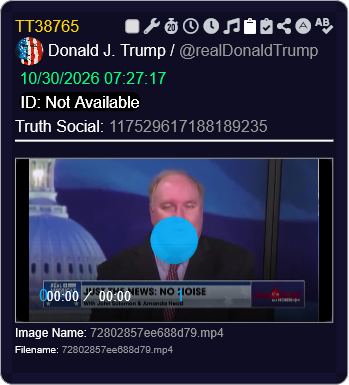
Big breaking news. We're going to give you your first two investigative fans that you watched us. Earlier today, the FBI has passed the child over to the Congress. 700 pages of Crossfire Hurricane documents, unreleased, and declassified. These are the documents President Trump intended to be released in January 2021, but the FBI skipped them up just from going to public release. We sued, tried to fight for them. Donald Trump came back in office and released them the second time. And today they got to Congress, and then they ended up in the hands of Just the News. And in just an hour, you're going to see our first story. I'm going to give you a timetable: 7 p.m., a first story is going to come out on Just the News.com. At 8 p.m., we're going to give all the documents one more round and post them onto the website so you can look at them, Wikipedia, Wikimedia. Wiki, to go through the documents yourself. You find some good stories, let us know them at Just the News, and we'll go pursue them. We're going to tell you about one right now. Perhaps the most important thing in the documents that we found early on, and two informants that they were used by the FBI to spy or to snitch on Donald Trump and his campaign was named Stefan Halper. Not the most famous, Christopher Steele, the guy that wrote the dossier, he's the most famous. But Stefan Halper was used quite a bit by the FBI. In fact, he was recruited by the FBI. Turns out, he is a pretty well-connected professional. They paid him $1.2 million by the FBI to be a confidential human source from the early 1990s to 2017. The last of those payments, $70,000 for his work snitching on the Trump campaign and the Crossfire Hurricane investigation. Now why? What are we going to tell you about it? It turns out that he got that money and he kept being used by the FBI, and he kept being validated as reliable, even though the FBI discovered he had given them an inaccurate, false, or disprovable story. What is it? He's the guy that told the FBI that Mike Flynn, who would be Donald Trump's national security advisor in the fall of 2016, back in 2014, had left a conference in the open. Along. Now, the FBI warned that was impossible and inaccurate. In fact, President Mike Flynn's security detail would never arrest him on. He is a two-star general and head of intelligence agency, he was always guarded by people. They determined it was unreliable, not true, inaccurate, not possible, but guess what? He kept using him, keep digging further and further into people like George Papadopoulos and Carter Page and others. We're going to get all this up for you to read with your own eyes on JustTheNews.com. 7 p.m., once we get off the show, the first story will be up. There'll be all the documents listed in chronological order with titles.
SHARE THIS RECORD
IN BRIEF
What to take away
From the FBI’s 2016 investigation and secret surveillance warrants to informant payments, disputed intelligence, congressional investigations, and the release of nearly 700 pages of declassified records in April 2025.
Follow the sources, not just the headline.
Keep the timeline and context in view.
ABOUT THIS RECORD
QNotables newsroom
Research, source tracking, and public-record context for readers who want the full picture.
KEEP READING
COMMENTS
No comments yet. Be the first to comment!
You must be logged in to leave a comment.
LOG IN TO COMMENT