School board candidates endorsed by conservative PAC saw mixed results in 2026 midterms
While Democrats overwhelmingly won control of the U.S. Congress after Tuesday’s midterm elections, school board races nationwide appeared to be a mixed bag for candidates endorsed by a leading conservative advocacy organization.
Approximately 75–80% of American voters may vote for candidates from the same political party across major races, according to historical Pew Research Center polling. However, the percentage who actually select the straight-party option on their ballot is different and varies considerably by state.
National figures
A 2014 Pew Research Center study found:
81%
Of likely voters intended to vote for one party across major races.
This measures intended voting behavior in major contests, not use of a straight-party ballot button. It is also historical, not a 2026 national estimate.
Pew Research Center
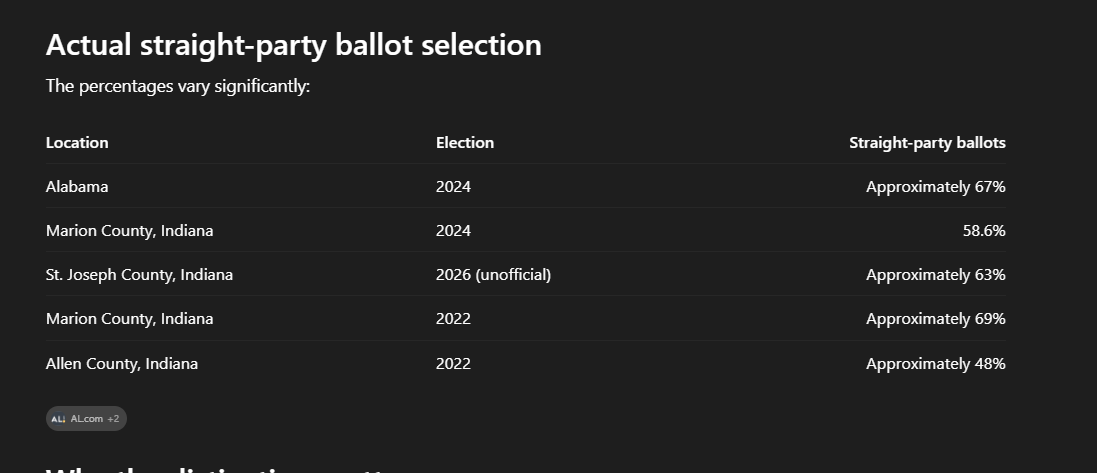
Actual straight-party ballot selection
image.png
Why the distinction matters
There are two different definitions:
Straight-ticket voting behavior: Choosing candidates from the same political party in multiple races, regardless of how each selection is made.
Straight-party ballot selection: Using a ballot option that automatically selects a party's candidates for eligible races.
Only six states offered the straight-party ballot option in 2026, including Indiana and Kentucky. Most states require voters to select candidates individually, even if they choose the same party throughout.
MIT Election Lab
My conclusion: If you're analyzing partisan loyalty, the historical 75–80% figure is a useful reference. If you're studying the actual use of straight-party ballot selections, county-level figures in the 40–70% range provide more concrete examples, but there is no single reliable nationwide percentage.
I can also break down Republican versus Democratic straight-ticket voting in Indiana, including how it affected the November 3, 2026 elections.